The Parking Math Logan Square's New Construction Doesn't Put in the Listing
September 3, 2026
September 3, 2026
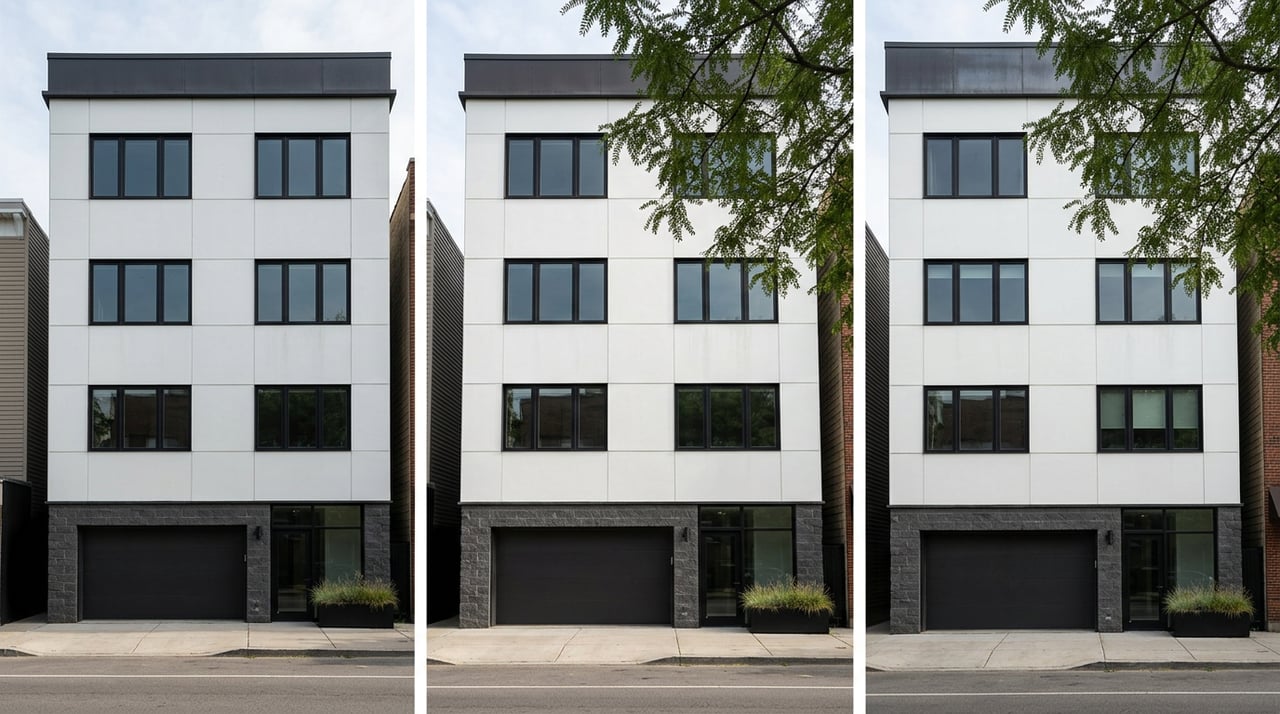
On a Monday evening in mid-July, close to fifty neighbors gathered for a virtual meeting hosted by the 1st Ward office to review plans for a vacant lot at Mozart Street and Diversey Avenue, on the edge of Logan Square and Avondale. The proposal: a five-story building with 40 apartments and two ground-floor storefronts. The number that dominated the conversation wasn't the unit count or the rents. It was nine. As in nine indoor parking spaces for forty households.
That ratio isn't a developer oversight. It's the direct, intended output of a zoning policy that has been quietly reshaping what "new construction" means in Logan Square. If you're comparing a new building's price per square foot against an older two-flat down the block, the parking line is where the comparison usually breaks down, and it rarely shows up until you're already deep into a tour.
Chicago's Connected Communities Ordinance, adopted by City Council in July 2022, lets residential projects within a half mile of a CTA or Metra station, or a quarter mile of a qualifying bus corridor, reduce required parking by up to 50 percent as of right, and by up to 100 percent with an administrative adjustment. Projects that put at least half their units toward affordable housing can skip straight to a full reduction without that extra approval step.
Then, in September 2025, City Council tightened the screws further. The amended ordinance eliminated the administrative adjustment requirement altogether for developments in transit-served locations that want to build zero parking, and it extended that option to residential zoning districts, RS and RT included, that previously didn't qualify. In practical terms, a developer near a Blue Line stop or a busy bus route no longer has to ask the city's permission to skip the garage. They can simply build the building.
Logan Square sits inside almost all of that map. Much of the neighborhood falls within a half mile of the California or Logan Square Blue Line stations, and Alderman Daniel La Spata's office, which represents the 1st Ward, has been an active proponent of what the alderman's team describes as community-based zoning along the Milwaukee Avenue corridor. The Mozart Street project qualified for reduced parking specifically because it sits near the California and Diversey bus routes, even though it's a fifteen to twenty minute walk from the nearest Blue Line stop.
The Mozart Street proposal isn't an outlier. A few blocks away at 3265 West Armitage Avenue, a different developer has proposed a five-story, 31-unit building with a 16-vehicle parking garage tucked at the rear of the site. That's roughly one parking space for every two units. At Mozart and Diversey, the ratio drops closer to one space for every four.
As of this writing, neither building has broken ground, which is part of the problem for buyers. The parking ratio gets decided in a zoning meeting and a permit filing long before a unit ever appears on a listing site with photos of quartz counters and wide-plank floors. By the time a building is move-in ready and marketed, the parking decision is baked in, and it rarely gets its own line in the listing description the way square footage or a renovated kitchen does.
Not every new building in the neighborhood cuts parking this aggressively. A 21-unit, four-story building approved at 1805 North Campbell and a 16-unit conversion of a 1920s church at 2625 North Talman are both moving through the permit process without the same public parking debate that Mozart Street drew. But the pattern across recent approvals is consistent enough that a buyer touring new construction in Logan Square should assume parking is the exception, not the default, until a listing agent confirms otherwise.
The economic logic behind the ordinance is straightforward. The Center for Neighborhood Technology's research on Chicago parking requirements found that mandated parking historically added more than $4,000 per space to construction costs for an outdoor lot, and more than $37,000 per space for an indoor garage. That cost gets passed to buyers whether or not they own a car. Cutting the mandate is meant to lower what it costs to build housing near transit.
What that means for a buyer, though, is that the savings on the construction side don't disappear. They move. Instead of showing up as a few thousand extra dollars folded into the purchase price of every unit, the cost of parking becomes a separate transaction the buyer has to handle on their own, if they want a spot at all. In Chicago, a deeded parking space, meaning one that comes with its own property record and can be bought, sold, or financed separately from the unit, commonly trades somewhere in the $20,000 to $50,000 range depending on the building and location. A monthly rented spot in a nearby garage typically runs $200 to $500 a month, indefinitely, with no equity building up behind it.
None of that is disclosed on the same page as the asking price. It's a conversation you have to start yourself, usually by asking the listing agent directly whether the unit includes deeded parking, an assigned but unowned space, or nothing at all.
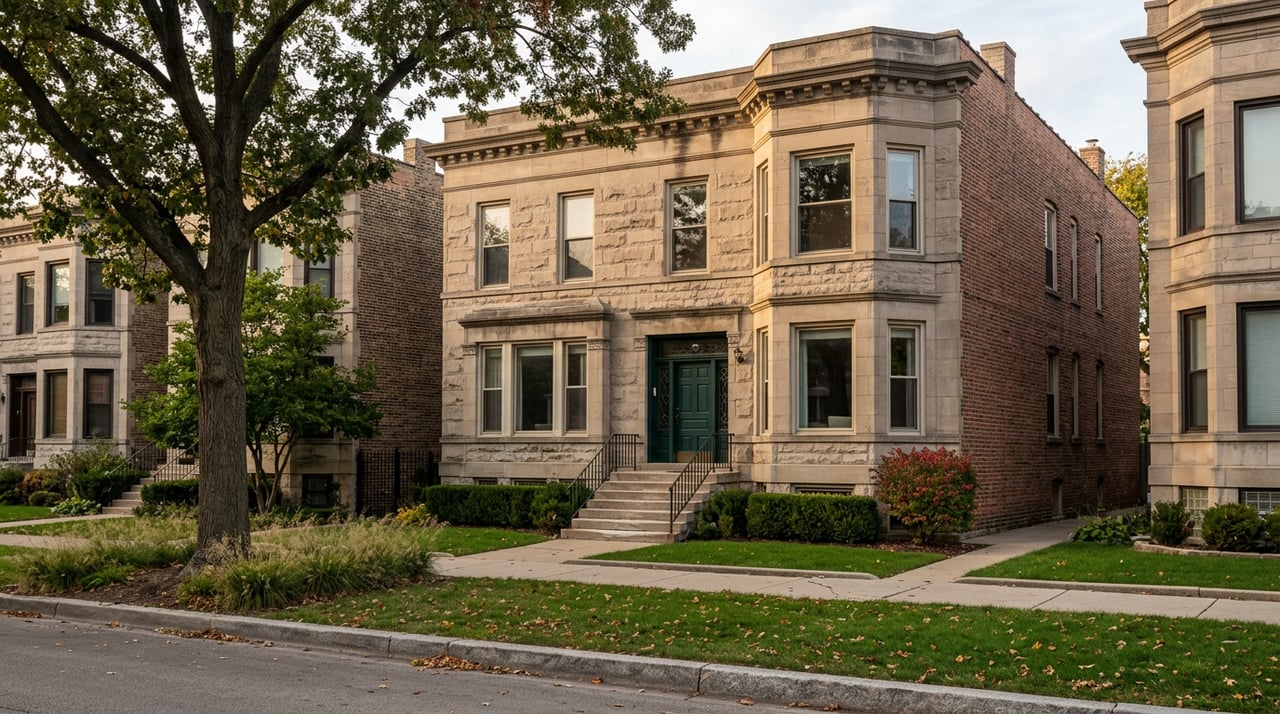
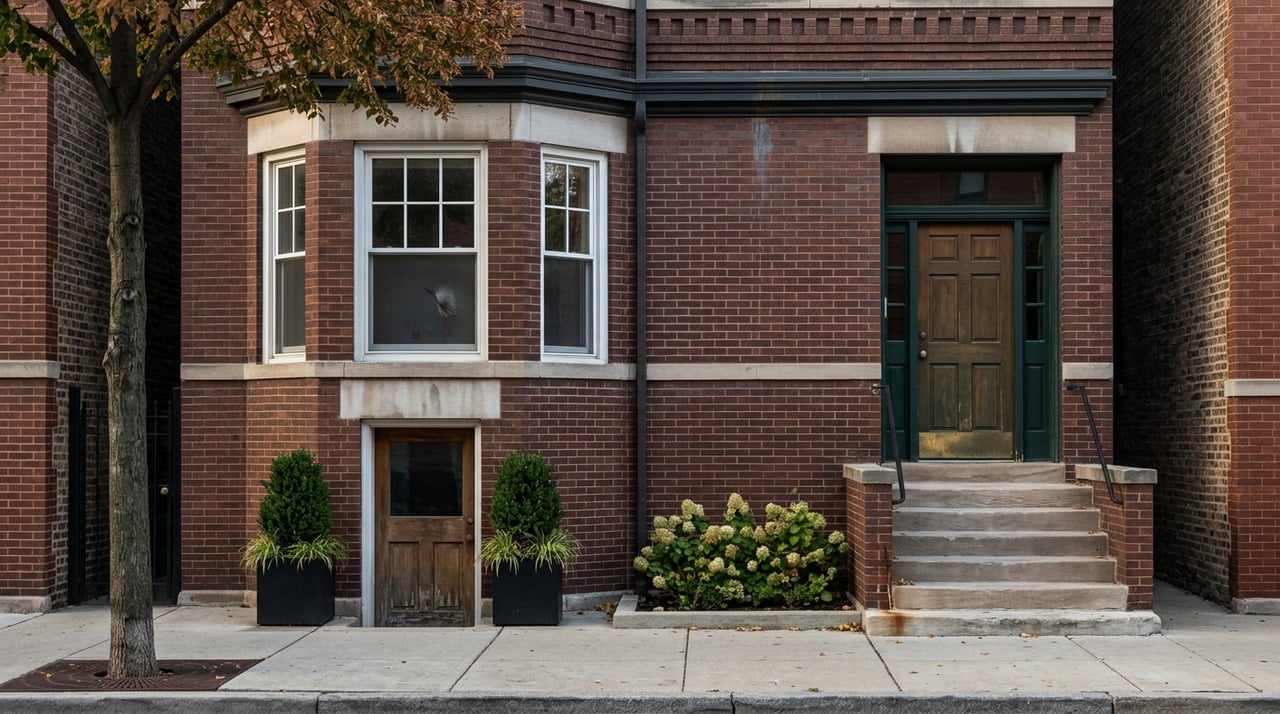
Compare that to Logan Square's older housing stock. The neighborhood's greystones, courtyard buildings, and classic two-flats were largely built under parking requirements that predate the Connected Communities Ordinance entirely, and many already include a garage or a parking pad off the alley as a standard feature rather than an upsell. A buyer choosing between a renovated vintage unit with an included garage and a new-construction condo with no dedicated spot isn't just comparing finishes and layout. They're comparing a total cost of ownership that one listing shows in full and the other doesn't show at all.
That comparison matters more given how fast the market is moving. Over the three months ending in May 2026, Logan Square home prices ran 12.3 percent ahead of the same period a year earlier, with a median sale price of $730,000 and homes going under contract in an average of 36 days, down from 45 days the year before. At that pace, there's little room in a typical showing schedule to circle back and research parking type after the fact. The question has to get asked on the first walkthrough, not after an offer is already in.
Does this only affect large apartment buildings, or condos too? The ordinance applies to residential development broadly, including for-sale condo buildings in transit-served locations, not just rental apartments. The Mozart Street and Armitage Avenue projects are both being proposed as apartments, but the same zoning rules apply to condo developers building in the same TOD-eligible pockets of the neighborhood.
Is every part of Logan Square affected equally? No. Eligibility depends on distance to a qualifying CTA or Metra station or bus corridor, and the map isn't uniform across the neighborhood. A block near the Logan Square or California Blue Line stops is more likely to see reduced-parking proposals than a block further from transit.
Can a building's parking ratio still change after a community meeting? Yes. Both Mozart Street and Armitage Avenue were still working through local approval as of this writing, and aldermanic and community input can shift unit counts, parking counts, or both before a final permit is issued.
If you're weighing a new-construction unit against something with more history and an included garage, that comparison deserves a closer look than a listing sheet can give it. The Lowe Group has spent years reading Logan Square block by block, permit by permit, and can walk you through what a specific building's numbers actually mean for your budget before you write an offer. Let's Connect.
The Lowe Group is a team of #1 Chicago real estate agents with strong broker and community ties. With our deep local knowledge and connections, we ensure that your home is priced right and receives maximum exposure. As seasoned negotiators and marketing experts, we are dedicated to providing a seamless and stress-free experience.
Stay up to date on the latest real estate trends.


Vast Green Space, the Free Zoo, and Culture in Lincoln Park.
Greystones, Gaslit Streets, and the Search for Historic Homes.
Outdoor Spaces, Cafe Retreats, and More in Lincoln Park.
A First-Timer's Roadmap to Buying a Home for the First Time in Lincoln Park.
We are not just here to help sell or buy your home; we are here to be a valuable resource for all your home needs and questions. Passionate about real estate, we find joy in the industry's dynamic nature and the opportunity it presents to connect people with their dream homes. Our success is built on our local expertise and market knowledge.