Roscoe Village's Median Price Doesn't Match What's Actually Closing
August 20, 2026
August 20, 2026
Pull up Roscoe Village's median sale price for the past year and you'll see a number in the $730,000 range. Narrow the window to the last three months and that number jumps past $937,000. That is not the neighborhood getting 28 percent more expensive in a single season. It is a signal about which homes are actually closing right now, and if you're bidding on a house that hasn't been touched since the Truman administration, that signal matters more than the headline appreciation rate ever will.
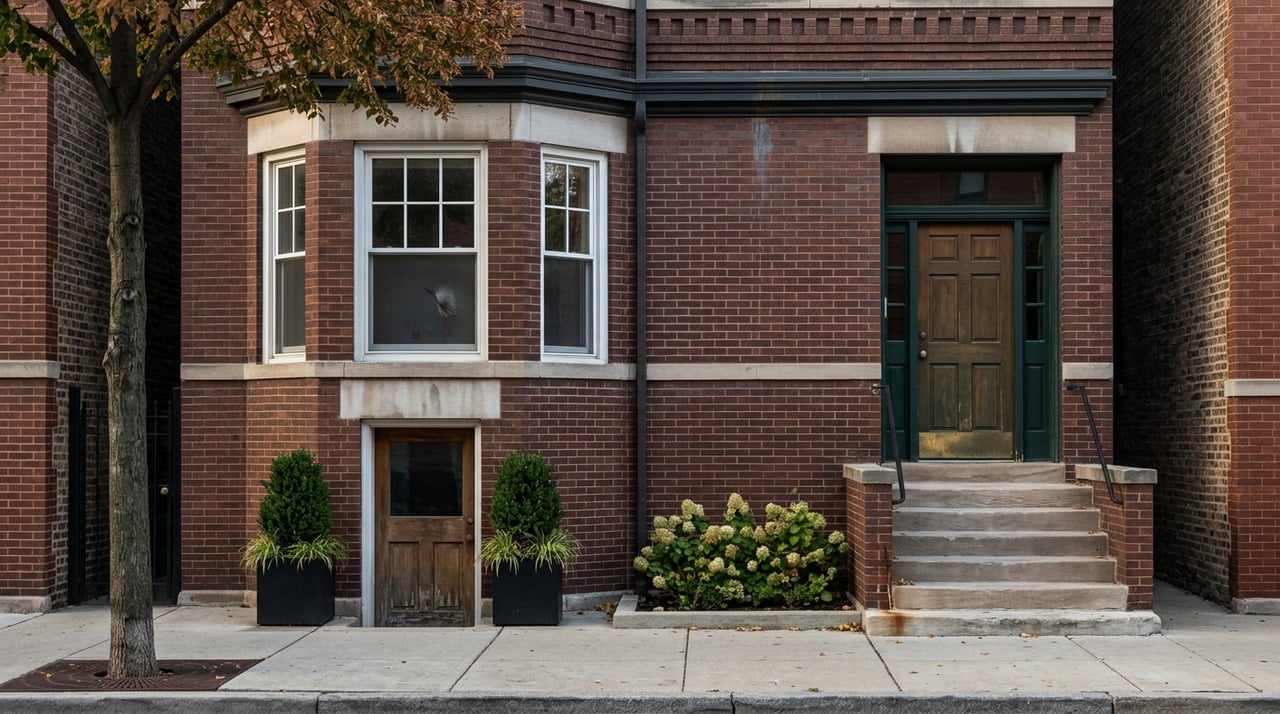
Here's the friction that catches buyers off guard: the comps your agent hands you and the house you're standing in are often not the same product. Roscoe Village's housing stock dates mostly to a 1920s building boom that replaced the neighborhood's original greenhouses with frame houses, brick two-flats, and greystones. Many of those homes still have their original bones: balloon framing, knob-and-tube wiring tucked behind plaster, cast-iron stack plumbing. When one of those homes sells after a full gut renovation, it closes at a price that reflects new mechanicals and reconfigured space, not the vintage shell underneath. When an untouched original sells, it closes at something else entirely. Blend those two categories into one median and you get a number that describes neither house accurately.
The clearest illustration of this gap sold, or rather listed, this month. A converted 1910 church at 1901 West Cornelia, on a quiet corner near Wolcott, hit the market in August at $6.5 million, or $650 per square foot. The building had belonged to the English Evangelical Lutheran Church of the Ascension until an antiques dealer named Joseph Partipilo bought it in 1999 for $134,500 and eventually turned it into a 10,000-square-foot single-family home with a nave-turned-living-room, 25-foot vaulted ceilings, and a bell tower you reach by interior staircase.
That is an extreme case, most Roscoe Village renovations don't involve a bell tower, but the shape of the transaction is the pattern worth noticing. The price reflects decades of accumulated renovation work layered onto a building that started with none of the systems a modern household expects. Somewhere between that $134,500 purchase and the current $6.5 million ask sits every mechanical upgrade, structural reinforcement, and permit that turned a century-old shell into a livable, sellable asset. Every renovated two-flat or bungalow that's closing this quarter carries a smaller version of that same math, and it's baked into why the three-month median is running so far ahead of the twelve-month figure.
If you're touring a home in Roscoe Village that hasn't been fully modernized, here's what a licensed contractor familiar with the neighborhood's housing stock will tell you to expect: balloon framing instead of platform framing, knob-and-tube wiring that predates modern electrical code, cast-iron plumbing stacks that are decades past their design life, and plaster walls uneven enough that a straightforward drywall patch turns into a bigger job. None of that is disqualifying. It's simply the baseline condition of a 100-year-old house, and it's exactly what a home inspector is trained to find and what your contingency period exists to surface before you're locked into a price built for a renovated comp.
The properties currently pulling the median upward have already absorbed those costs. The properties that haven't are priced closer to the twelve-month figure, and the gap between the two is your renovation budget in disguise.
One detail that changes the calculus compared to a neighborhood like Lincoln Park: Roscoe Village is not a designated landmark district. Standard City of Chicago building permits still apply to electrical, plumbing, and structural work, but a renovation here doesn't need Commission on Chicago Landmarks approval the way some Lincoln Park properties do. That sounds like pure upside for a buyer who wants to modernize a vintage home without a design review process slowing things down, and in terms of speed, it is.
What it also means is that renovation quality across Roscoe Village's older housing stock is more variable than it might be in a district with a design review layer built in. Two identical greystones on the same block can carry very different renovation histories, one gutted to the studs with new mechanicals, the other painted and staged over its original 1920s systems. Without a landmark commission checking anyone's work, the burden of telling those two houses apart falls on your inspector and your due diligence period, not on a municipal review that already happened.
The other pattern worth understanding before you write an offer: a meaningful share of Roscoe Village transactions involve converting a two-flat into a single-family home. Contractors who specialize in the neighborhood describe combining units into 2,400 to 3,200 square feet of living space, a project that typically means removing the second kitchen, opening up the stairway between floors, upgrading mechanicals to serve the combined unit, and refiling zoning and permits with the city. That conversion is one of the more reliable ways to get single-family scale in a neighborhood where standalone lots command a premium, but it's also a project with its own cost curve, and a home currently mid-conversion or recently converted will price differently than a two-flat still operating as two separate units.
For buyers who'd rather not underwrite someone else's renovation, or their own, there's a third path: new construction. RiverWard, a 35-unit row home development on a riverfront parcel at 2221 West Oakdale Avenue in Roscoe Village, is delivering its first units this fall. Phase 1 has already sold out, and phase 2 is now underway. It's a fundamentally different trade than a vintage two-flat.
| Vintage resale (unrenovated) | Vintage resale (renovated) | New construction (RiverWard) | |
|---|---|---|---|
| Price signal | Closer to 12-month median | Closer to 3-month median | Premium, reflects delivery timeline |
| What you're buying | Original systems, real character | Modern systems in a period shell | New mechanicals, no legacy systems |
| Diligence focus | Inspection, sewer scope, panel age | Permit history, scope of past work | Build schedule, finish selections |
| Renovation budget | Plan for one | Should already be reflected in price | Minimal near-term |
None of these is the "right" answer. They're different products wearing the same neighborhood name, which is exactly why a single median price flattens more than it reveals.
If you're in contract or about to write an offer on an older Roscoe Village home, a few questions are worth asking before you shorten or waive an inspection contingency:
A 35-day average time on market this quarter means homes are moving quickly, and quick timelines create real pressure to cut corners on diligence. That pressure is precisely backward for a housing stock this old. The pace of the market is a reason to have your inspector, contractor, and financing lined up before you tour, not a reason to skip the parts of due diligence that matter most in a neighborhood full of century-old bones.
Does Roscoe Village's lack of landmark status mean I can renovate however I want? No. Standard Chicago building permits still apply to any electrical, plumbing, or structural work. What you avoid is the additional layer of Commission on Chicago Landmarks review that applies in some historic Lincoln Park districts.
Is a two-flat conversion always worth the cost? It depends on the starting condition of the building and what the combined square footage will be worth on resale. A conversion that requires upgrading original 1920s mechanicals across two units costs more than one where recent work has already brought systems up to code.
Why would I trust the three-month median over the twelve-month figure, or vice versa? Neither number alone tells you what a specific house is worth. The gap between them is more useful than either figure in isolation. It tells you how much of what's currently closing has already been renovated, which is information you need before you compare your own target house to the comps you're being shown.
If you're weighing a vintage resale against new construction in Roscoe Village, or trying to figure out what a specific two-flat's renovation history actually means for your offer, The Lowe Group can walk through the comps with you block by block. Let's Connect.
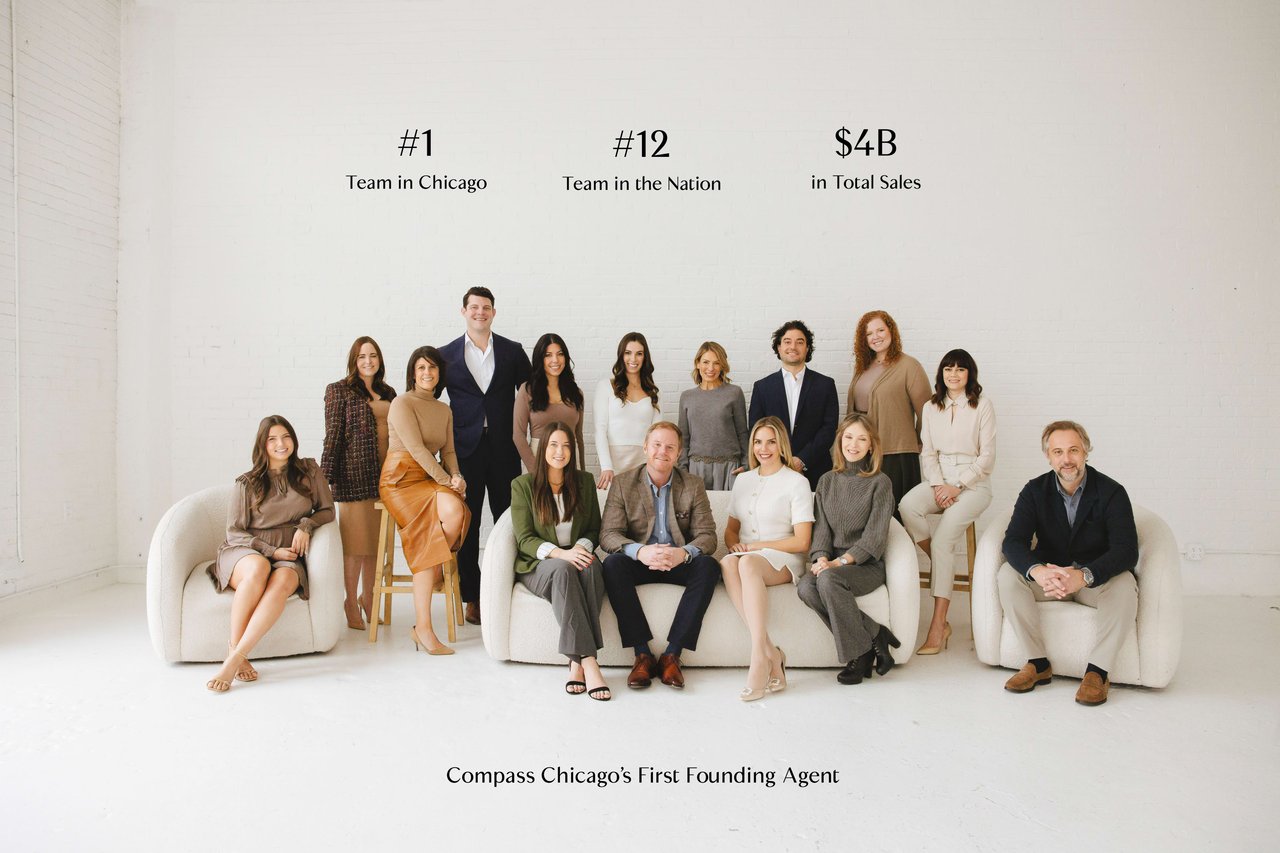
The Lowe Group is a team of #1 Chicago real estate agents with strong broker and community ties. With our deep local knowledge and connections, we ensure that your home is priced right and receives maximum exposure. As seasoned negotiators and marketing experts, we are dedicated to providing a seamless and stress-free experience.
Stay up to date on the latest real estate trends.
The Best Things to Do in Lincoln Park, Chicago, on a Weekend — From the Lakefront to the Stage.

A Buyer's Guide to Luxury Homes in Lincoln Park, Chicago — What to Expect and What to Look For.
We are not just here to help sell or buy your home; we are here to be a valuable resource for all your home needs and questions. Passionate about real estate, we find joy in the industry's dynamic nature and the opportunity it presents to connect people with their dream homes. Our success is built on our local expertise and market knowledge.